
The Ultimate Guide to Sandstone Paving: Styles, Benefits, and Care

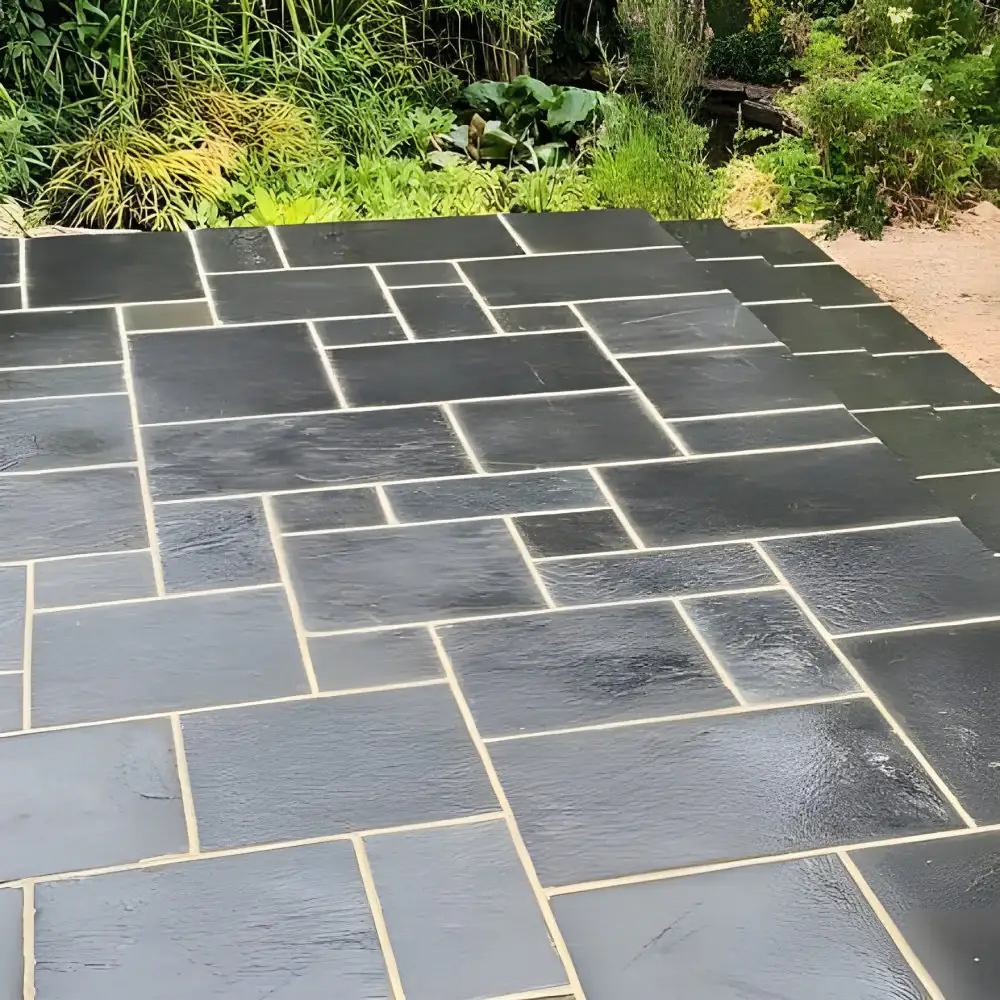
Whether you are redesigning an existing garden patio or planning a complete outdoor transformation, sandstone paving remains one of the most versatile and timeless natural stone choices available. Famous for its rich, earthy tones and unique textual character, sandstone brings warm, natural beauty to both modern and traditional landscapes.
Why Choose Sandstone for Your Patio?
Sandstone is a sedimentary rock formed from compressed sand grains—mostly quartz and feldspar—over millions of years. This origin gives it a distinctive aesthetic where no two slabs are identical.
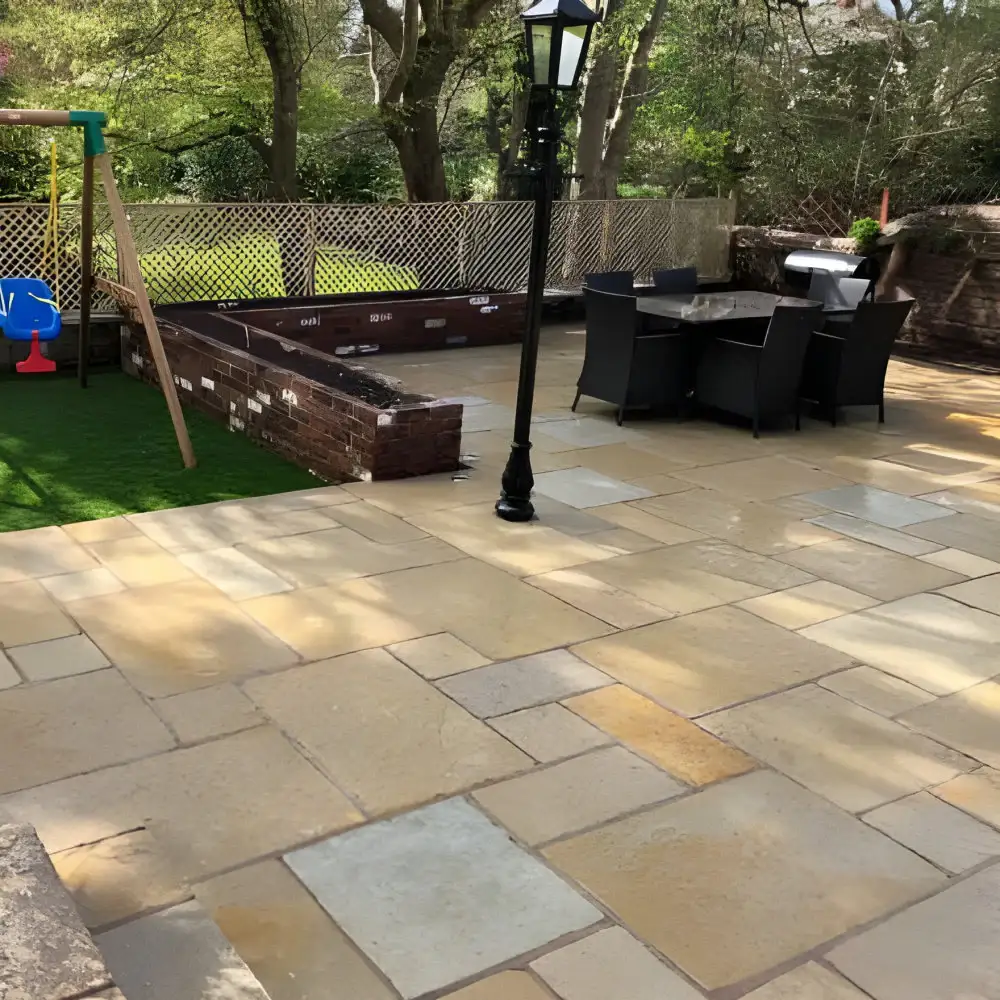
- Natural Color Variation: Ranging from subtle greys (like Kandla Grey) to warm golden tones (Rippon or Autumn Brown), sandstone ages gracefully outdoors.
- Slip Resistance: The granular, textured surface provides excellent traction underfoot, even when wet.
- Workability: It can be cut into uniform rectangular pavers, hand-split for a rustic look, or carved into circular feature kits.
- Thermal Comfort: Sandstone retains less heat in peak summer than darker granite or concrete, making it comfortable underfoot.
Finishes: Riven vs. Sawn Sandstone
When shopping for sandstone slabs, you will primarily choose between two distinct finishes:
1. Riven Sandstone (Traditional & Rustic)
Riven stone is split along its natural geological fault lines by hand. This preserves the organic ripples, ridges, and varied depth of natural stone.
- Best for: Cottage gardens, traditional patio layouts, and rustic outdoor spaces.
- Look: Rugged, textured, and full of natural character.
2. Sawn & Smooth Sandstone (Contemporary & Sleek)
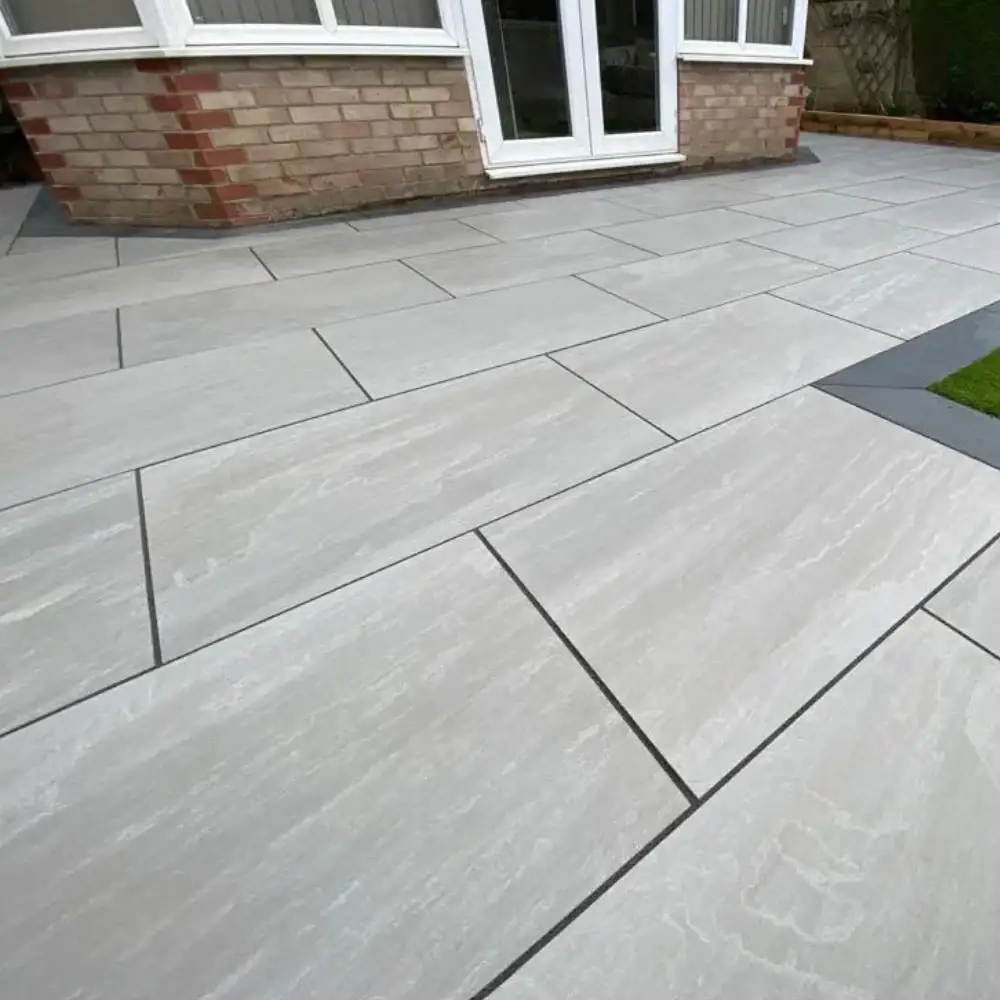
Sawn sandstone is machine-cut on all six sides, creating sharp, clean edges and a flat, polished face.
- Best for: Modern, minimalist garden designs and seamless transitions between indoor and outdoor living areas.
- Look: Uniform, sleek, and contemporary.
Sandstone vs. Vitrified Porcelain
Sandstone is frequently compared to outdoor porcelain slabs. Here is how they stack up across key factors:
| Feature | Natural Sandstone | Outdoor Porcelain |
| Aesthetic | 100% natural organic variation | Uniform, printed designs |
| Porosity | Moderate (requires sealing) | Very low ($<0.5\%$ absorption) |
| Algae Resistance | Needs periodic cleaning | High surface resistance |
| Cutting & Laying | Easy to cut and work with | Requires specialized diamond blades |
| Value | Highly cost-effective | Higher upfront material cost |
Essential Maintenance Tips
Because sandstone is naturally porous, a simple upkeep routine keeps it looking pristine for decades:
Key Rule: Always use a breathable, stone-penetrating sealer after laying sandstone. Sealing prevents deep water absorption, reduces green algae buildup, and guards against frost spall.
- Sealing: Apply a high-quality sealant every 2 to 3 years.
- Cleaning: Sweep regularly with a soft broom. Wash with mild soapy water or dedicated stone cleaner.
- Pressure Washing: Use caution when jet-washing. Keep the nozzle at a $45^\circ$ angle and avoid blasting joints directly, as this can dislodge pointing mortar.